Dominika Černohorská: For Me, Winemaking Is About Respect for the Landscape, Community, and the Courage to Do Things My Own Way
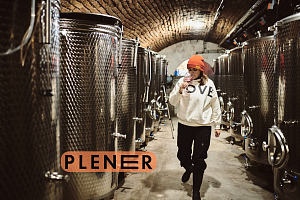
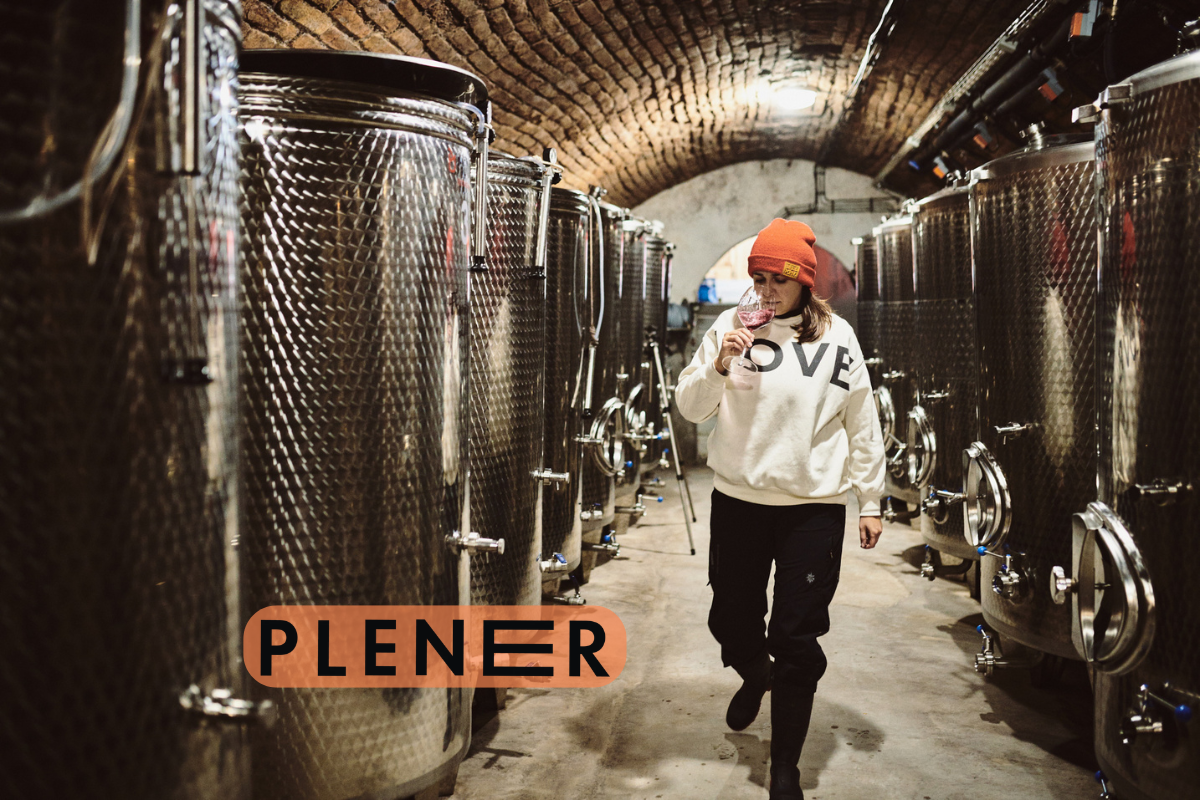
In this interview, Dominika Černohorská of Plenér Winery reveals how she went from naive enthusiasm and an “eleventh” university application to being awarded the title of Winery of the Year 2025. In an open and honest conversation, she describes her journey from theory to practice, her respect for the Pálava landscape, and the unique community that stands behind her success.
Dominika, your journey so far almost sounds like a movie story. Today, you are at the helm of the Winery of the Year 2025, yet you originally applied to study winemaking as a backup option. How did that happen?
That’s true. After high school, I had no idea what I wanted to do with my life. I wasn’t passionate about any particular field. I spent a year studying languages and then applied to ten different university programs. My father, who was already involved in the wine business at the time, suggested that I also apply for a winemaking program as an eleventh, backup option. I was somewhat skeptical, but during that year of studying English, the idea matured in my mind. I realized that studying something practical, tangible, and connected to nature would make the most sense to me.
You founded Plenér Winery together with Ivo Marek, your former dentist. That is quite an unusual partnership in the Czech wine world. How does a patient and a dentist become business partners in a winery?
I had been Ivo’s patient since childhood. He straightened my teeth, and because I was a rather complicated case, he experimented with various orthodontic devices on me. I spent a lot of time in his chair and developed a friendly relationship with him. Years later, we met again at the Valtice Wine Market. At that point, I was in the euphoric final stage of my studies and working at Volařík Winery. Ivo loved wine and wanted to buy a vineyard and start a winery simply for the joy of it. At the time, I only dreamed of having my own project someday. I had no capital, no inheritance, and was just entering the realities of the industry. It turned out that our dreams could be connected, and we agreed to work together. Ivo gave me a great deal of freedom to develop.
How do you divide responsibilities?
I often lead the winery according to my own vision. Sometimes I pursue my ideas very stubbornly, even when I cannot rationally explain every single step at that moment. I simply feel that it has to be done that way. Ivo’s trust is crucial to me. It is equally important that everyone in the winery believes in what we are doing and feels aligned with the path we have chosen.
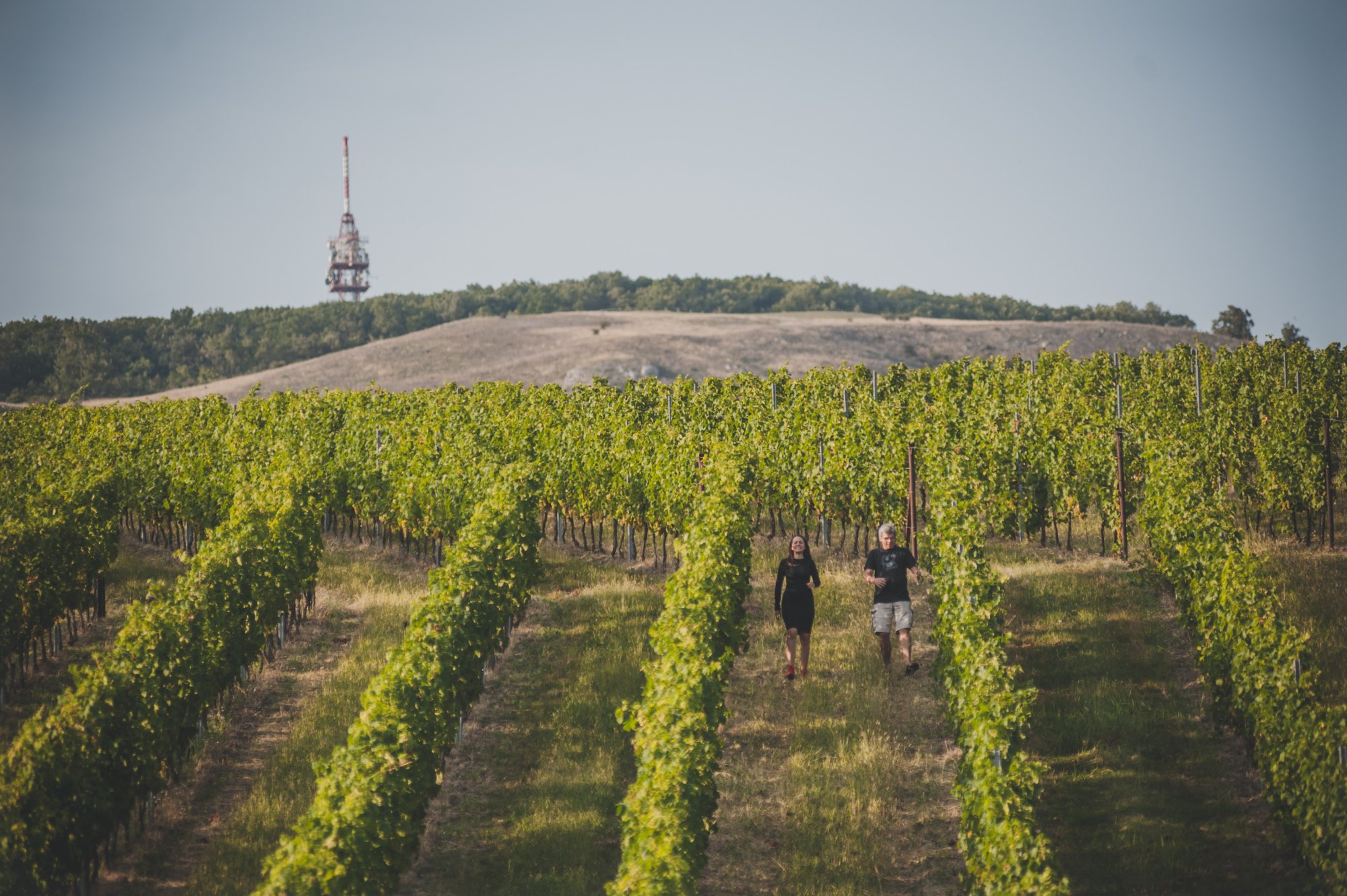
You started ten years ago, in 2016. What vision did you have when you entered the Plenér project?
I approached everything with enormous enthusiasm and, honestly, a great deal of naivety. If I had known then everything that awaited me, I probably would have been much more afraid. Friends and colleagues have always been incredibly important to me. In the early days of Plenér, especially Jindřich Kadrnka and Honza Stávek were there to help, advise, and support me. At the beginning, we improvised a lot, and I relied heavily on what I had learned at university and observed around me. Neighbors from nearby vineyards did our tractor work, and we used herbicides to eliminate weeds under the vines—something that is prohibited in organic farming. But gradually, and actually quite quickly, I realized that this was not the path I wanted to follow.
That realization eventually led you to organic farming, for which you received the Vinatura Award this year. Was it intuition or a rational decision?
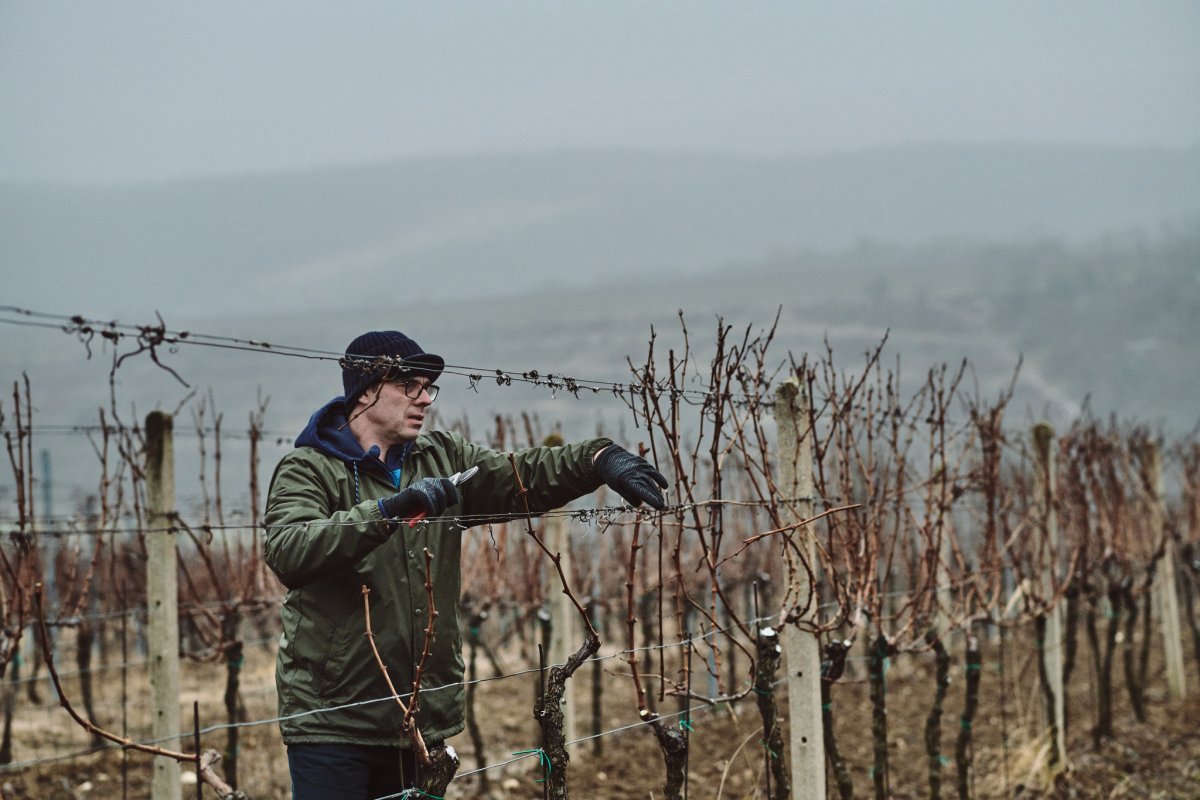
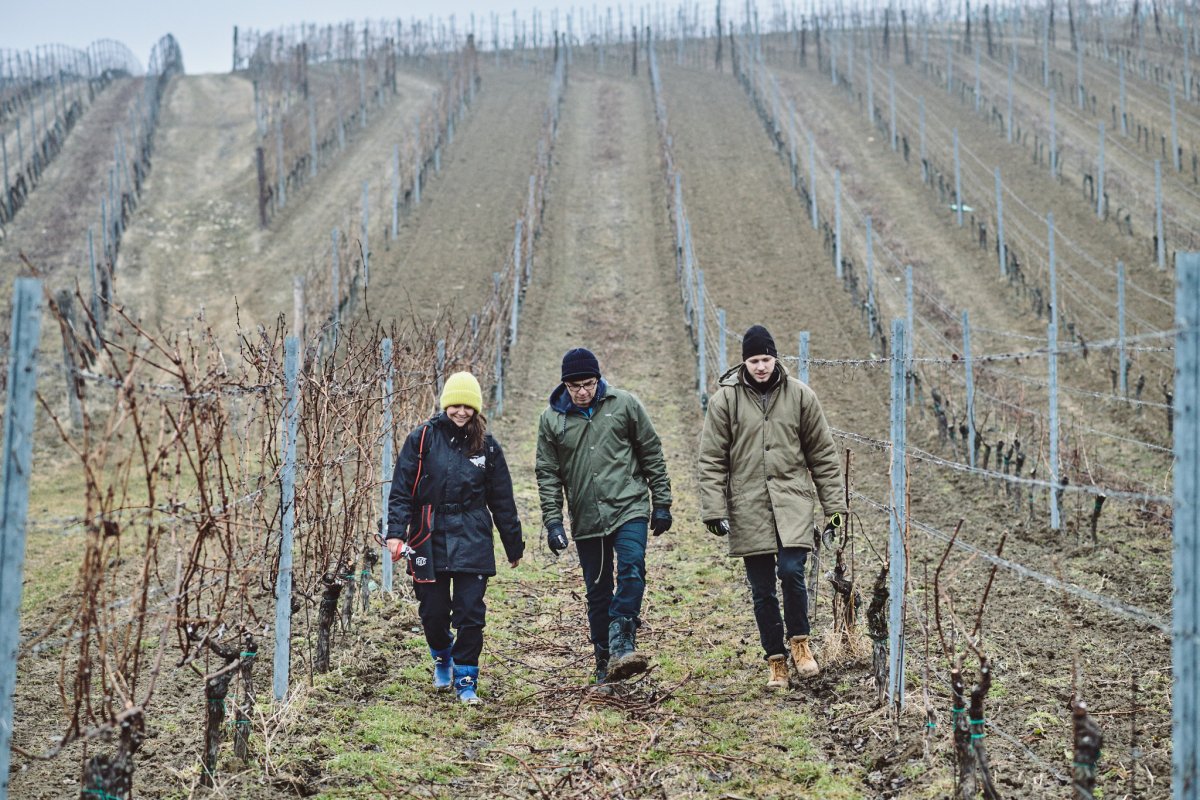
It was a process of development. Ivo wanted to pursue organic farming from the very beginning, but I wasn’t one hundred percent convinced. I had to arrive at that conviction through practice and observation of vineyards and the landscape. For me, ecology is a comprehensive concept. I’m not comfortable simply following rules or recipes. I need to understand things first and feel that they are truly right. What I’ve learned is that this is a lifelong education. Every topic I open reveals several more behind it. When establishing new vineyards, we create so-called biodiversity islands among the vines, planting trees, shrubs, and herbs. We try to break up the monoculture and encourage as much natural biological protection as possible. Supporting diversity and life in the soil, as well as above it, is essential for a healthy vineyard.
Plenér is known for its strong community. Is it true that friends still come to help with vineyard work?
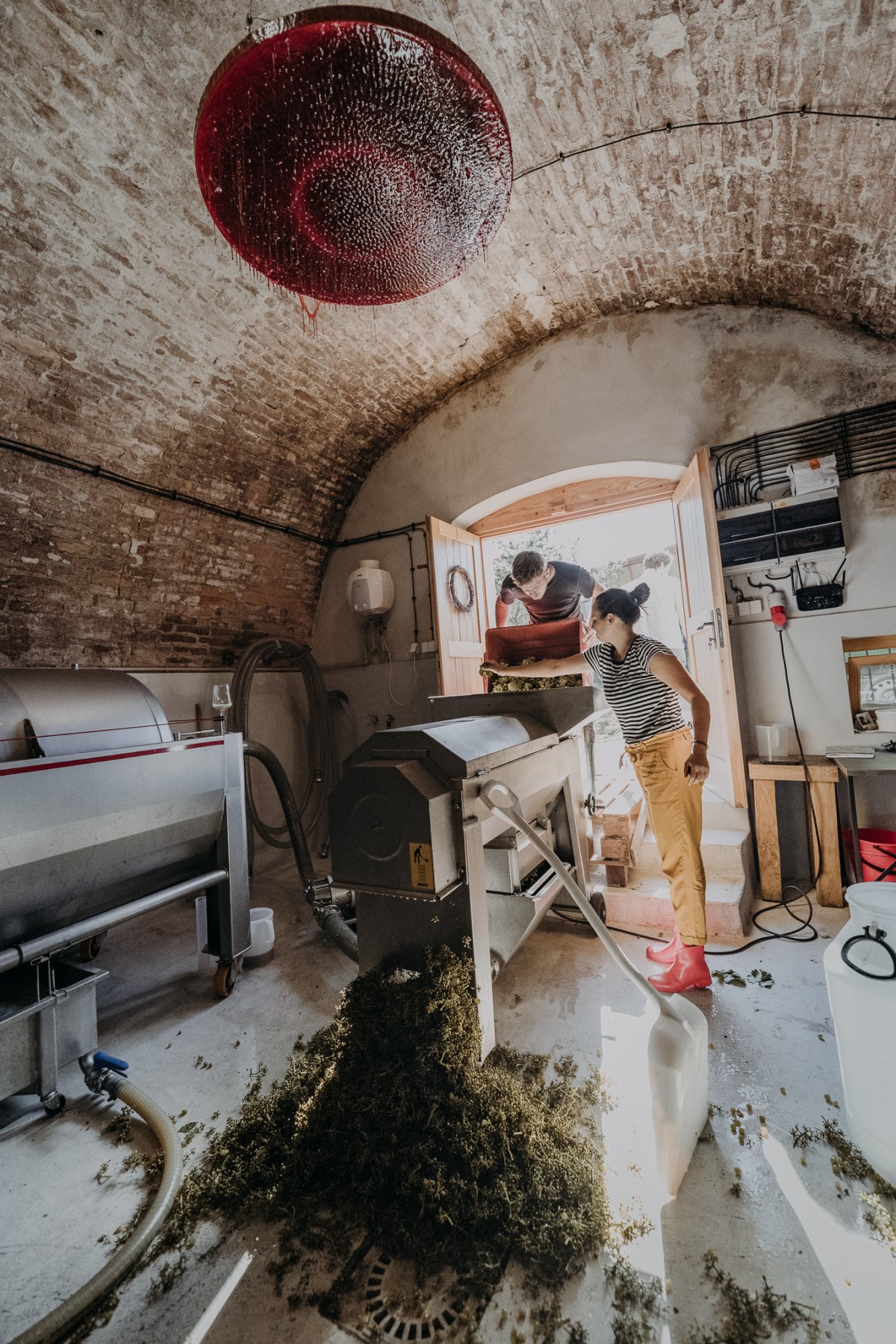
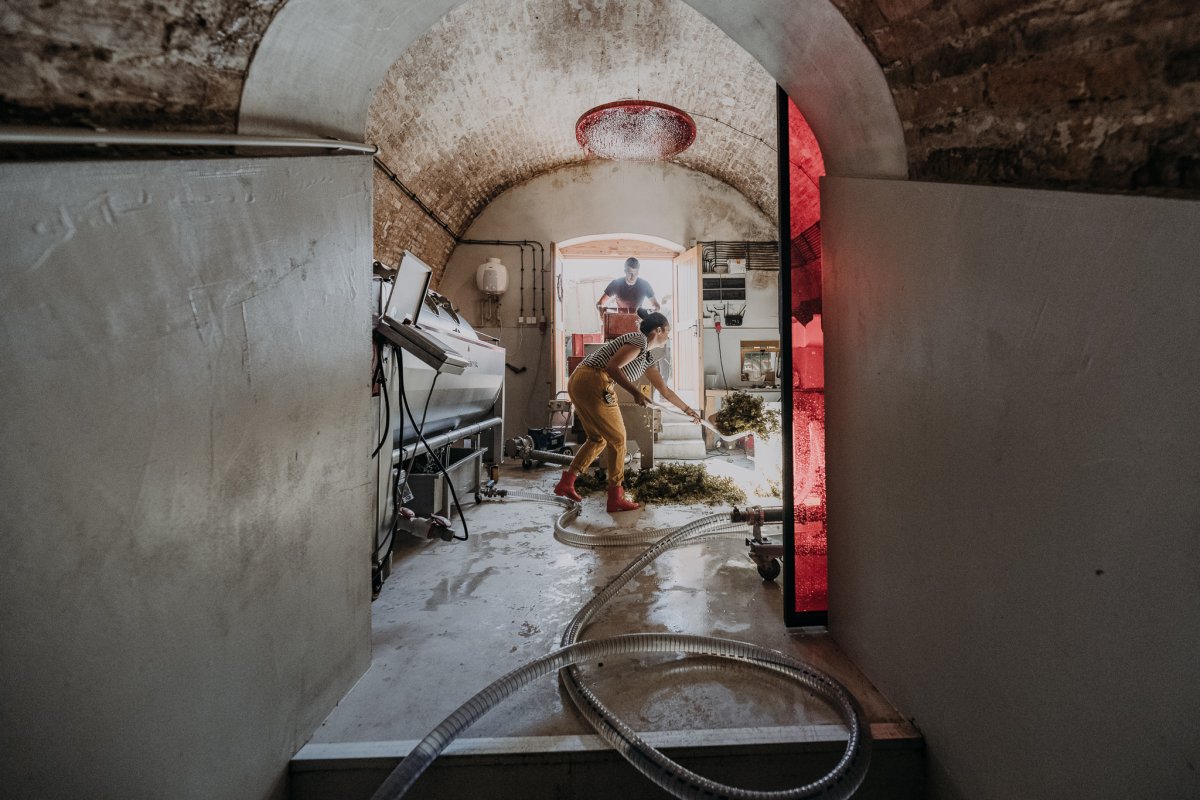
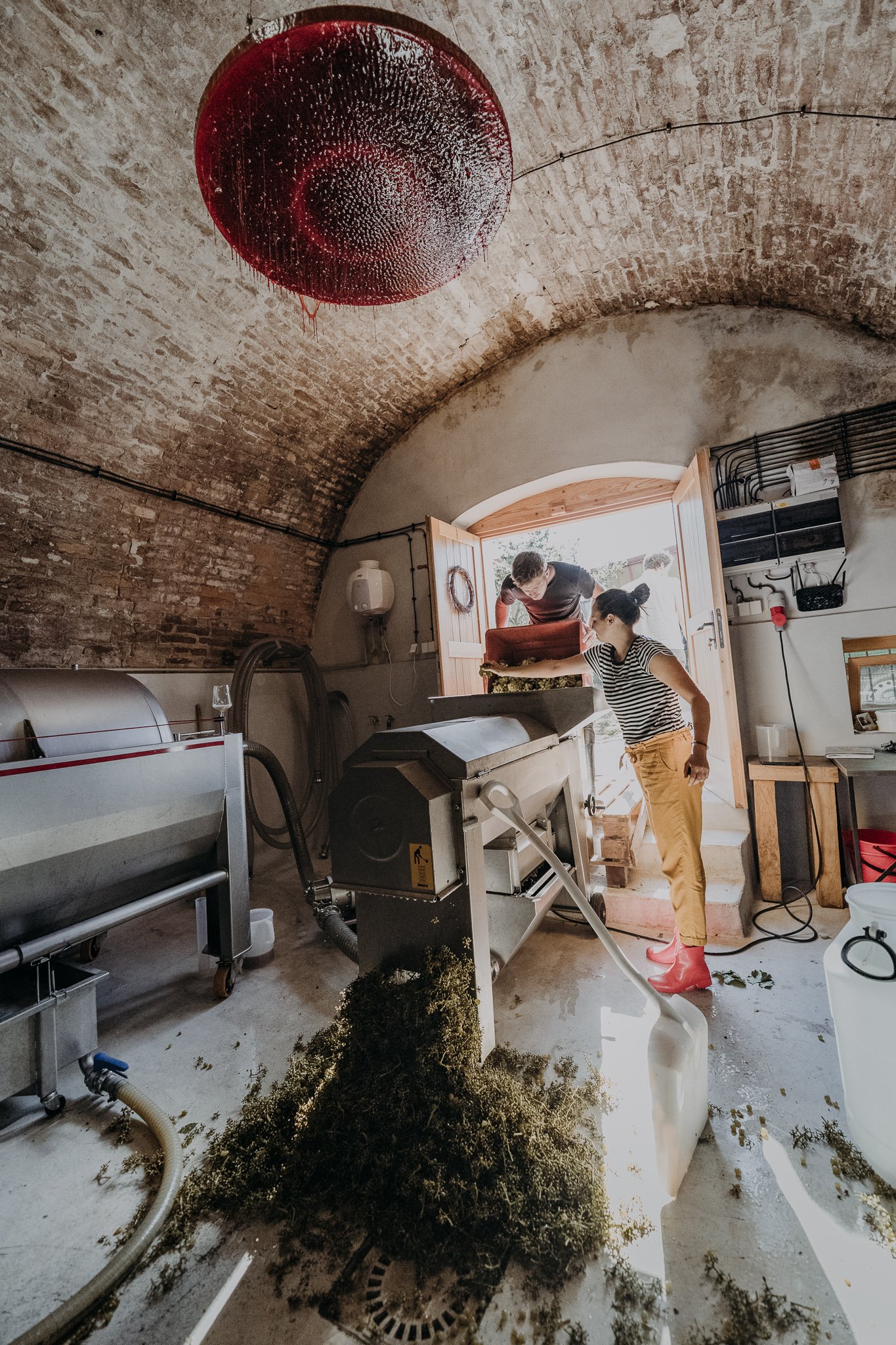
This has been part of our winery from the very beginning, and I’m incredibly grateful for it. When we started, friends from all over the country came to help me with every type of vineyard work. Today, there is an organic bubble of people around us who genuinely love Plenér. Harvest season has become a major community event, allowing us to pick all our grapes by hand. Last year, during harvest, I kept an online diary on Instagram so that people who couldn’t be with us in Pálava could still see what was happening in the winery. I enjoy sharing our enthusiasm.
Where did the idea come from to write a diary during the most physically demanding period of the year?
It was my idea. I enjoy writing and sharing. I actually wanted to do it a year earlier, but technical obstacles prevented it. I was very happy that it finally worked last year and that so many people followed the daily updates from the vineyard and cellar. I also received feedback from customers who said that thanks to the diary, they now understand much more about wine and vineyards. That gives me great satisfaction.
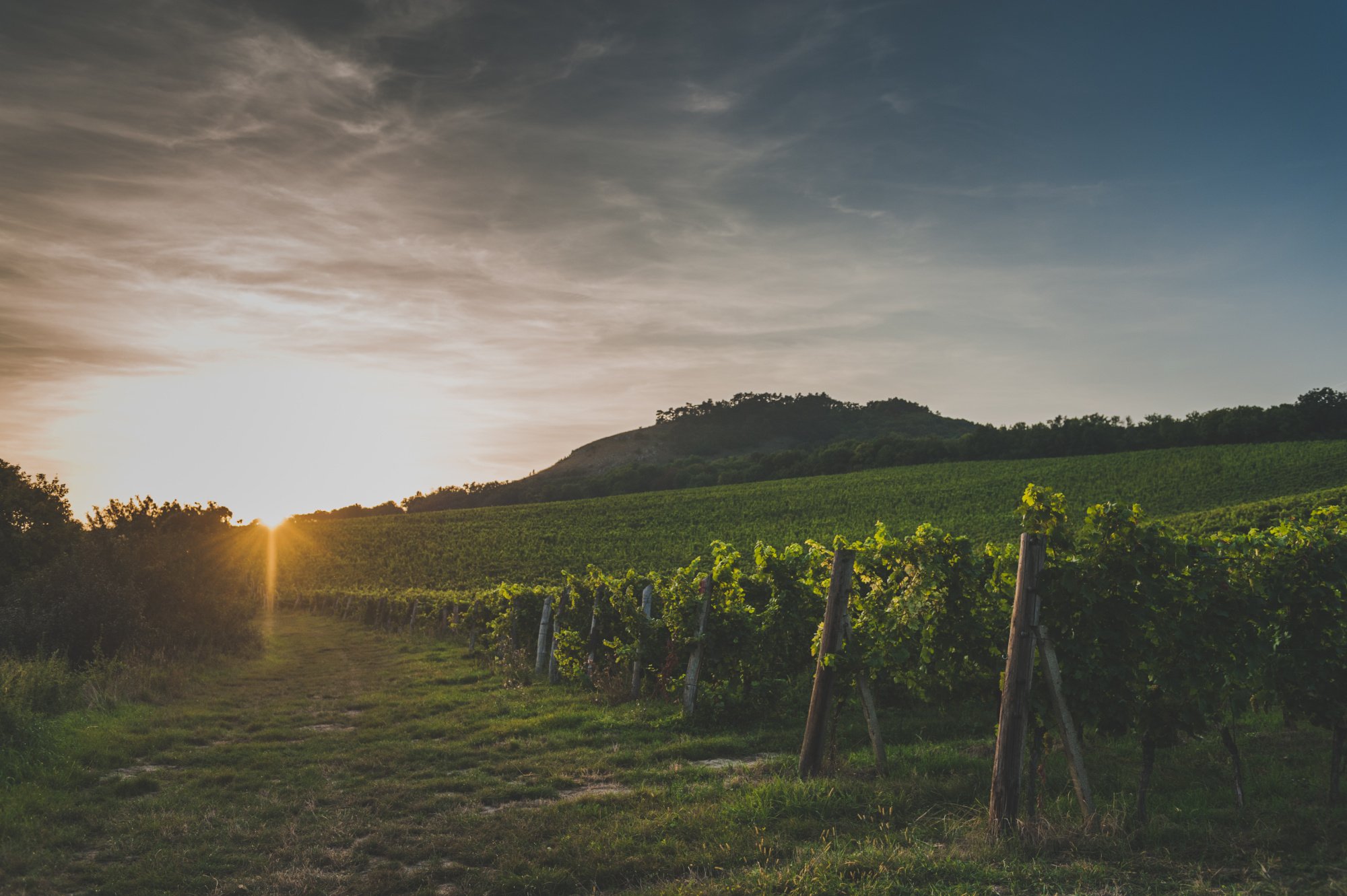
Plenér Winery received the highest award in the Winery of the Year competition. Can you identify one thing that truly sets it apart from other wineries?
It’s difficult for me to judge, but perhaps it’s our enormous passion, joy, authenticity, and sincerity. For me, atmosphere is indispensable to teamwork.
The title “Winery of the Year 2025” is a tremendous achievement. What does this award mean to you?
When the winner was announced, I was genuinely shocked. I’m a very emotional person, but the moment I heard “Plenér Winery,” all emotions seemed to disappear, leaving only amazement. The question I’m asked most often is whether I see the victory as a commitment. I see it as recognition of what we do, and it makes me very happy. Every vine we plant and every bottle we produce is already a commitment. Maintaining quality and continuously improving it in a direction I believe in is simply a natural part of my work. I also see our victory as an important shift within the wine industry itself. A small, non-mainstream winery led by a woman won the competition. That is a significant change.
This year, the competition was based on a new set of ten principles used to select the winner. Besides product quality, these principles emphasize authenticity, inspiration, communication, sustainability, and stewardship of the landscape. Thanks to this approach, the differences between large, medium-sized, and small wineries disappeared. Suddenly, we were all on the same level. I was delighted by how beautifully these principles were formulated and by the fact that they included values that are personally very important to me. Therefore, I don’t see it merely as our victory but as a victory for the entire Czech wine industry. I’m already looking forward to future editions, new inspiration, and new winners.
Once the emotions settled, what did you tell yourself? “We’re good,” or “Let’s work even harder”?
It’s actually quite funny that a winery with “overgrown” vineyards and unfiltered wines won. That’s a paradigm shift. I even thought about having T-shirts made for our team saying: “We have overgrown vineyards, cloudy wine, and we’re Winery of the Year!” I accept it with humility, but also with great joy. It shows that the wine world is changing, moving toward the essence of healthy soil and thinking in terms of generations. It proves that our approach—which does not strive for universally accepted admiration—can still receive such recognition.
How would you like people to perceive your wines?
I love traveling around the world to discover wine, and I would like any wine produced in Moravia or Bohemia to be viewed with a sense of national pride. That attitude feels completely natural abroad. I would like people to see the wine in their glass as the result of the work of specific people in a specific country where we all live.
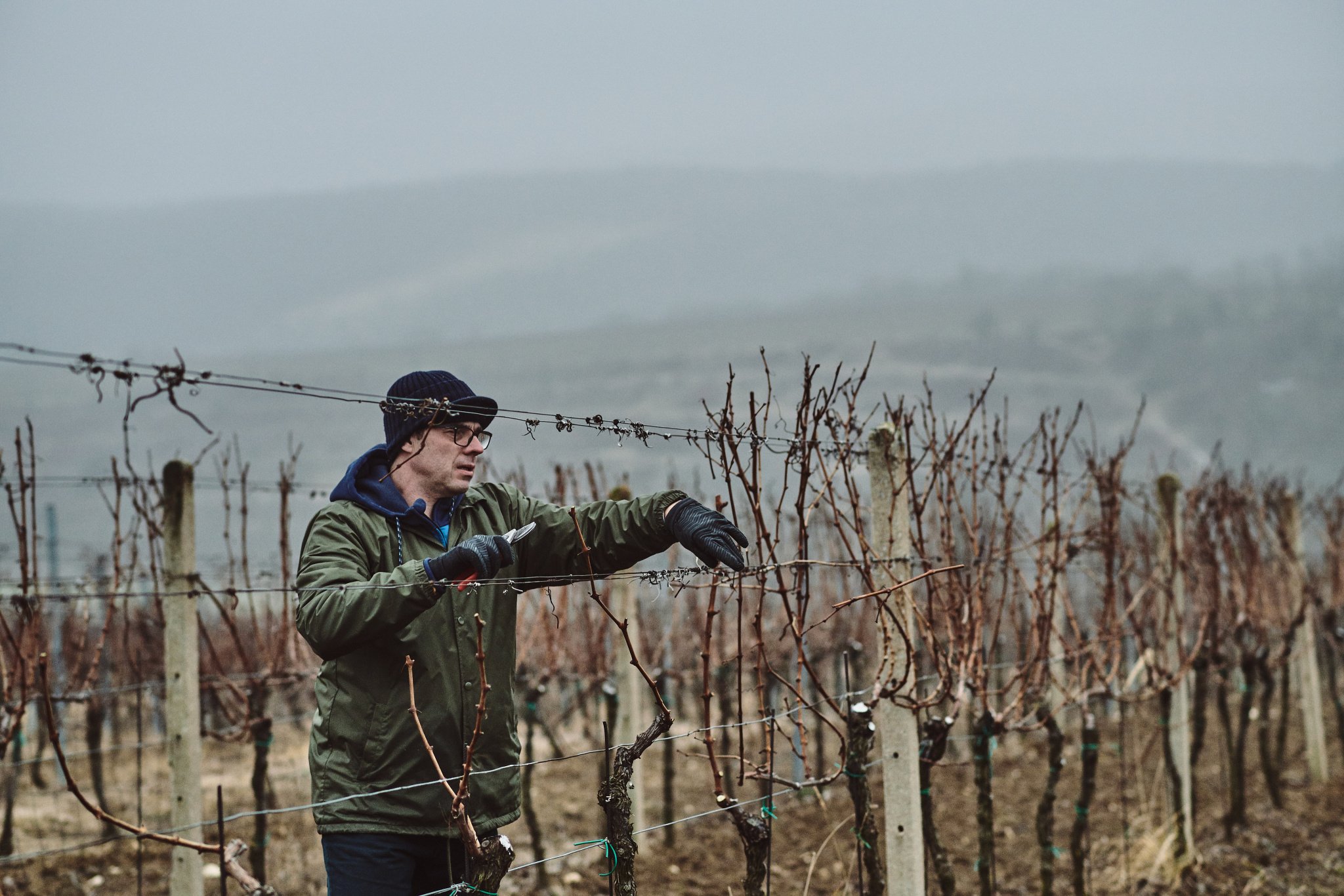
And specifically, what impression does Plenér wine leave?
As truthful. That’s how I like to describe our wines. It gives me great joy when people who have never encountered this style of wine before discover us. Because we are based in Pavlov, a very tourist-oriented destination, visitors often stop by looking for a completely different style of wine. Yet many end up spending the whole evening with us, enthusiastically drinking a wine spritzer made from our unfiltered Blaufränkisch. It is fascinating to watch their preconceived ideas about taste collapse. They leave genuinely happy because they experienced something they never expected and gained insight into the story behind the glass. For me, that is the best possible outcome.
This year, Plenér received the Vinatura Award for the first time in its history. If you had to name one specific moment each year when you feel the vineyard gives back for all the ecological care you invest in it, what would it be?
Harvest season. That is when everything is most intense. The life in the vineyard, the crop, the anticipation surrounding a new vintage, and the relief that we have successfully completed another year in viticulture. Standing in a vineyard that is blooming and fragrant, hearing the snipping of pruning shears—that is the moment. Although this sounds poetic, it is primarily hard work. For decades, agriculture focused solely on maximizing production and exploiting the soil. This created inhospitable landscapes without shade or life, places where neither wildlife, birds, nor people feel comfortable.
It is deeply rewarding to see biodiversity returning to vineyards, with trees and shrubs growing again as they did in Pálava a hundred years ago. Even though it is extremely difficult under our conditions to abandon established intensive farming practices, and we often have to proceed through trial and error, the feeling that we are bringing life back—not only above ground but especially into the soil beneath our feet—confirms that we are on the right path.
This belief also led to the creation of the “Diverse Vineyard” symposium, which I organized together with my friend Honza Čulík in 2023. The goal was to share experience and inspiring approaches with others.
Does that sharing actually work? Are winemakers willing to share knowledge they often gained through years of hard work?
I believe so, and I feel that it is beginning to work around me. Sharing experiences among winemakers seems completely natural and extremely important. Not long ago, after the Winery of the Year results were announced, a fellow winemaker called me asking whether he could look at our plans for biodiversity-focused vineyards. I sensed a little hesitation about “copying” the idea, but my answer was clear: I wish everyone would copy it! After all, I originally drew inspiration from a specific winery in Austria myself.
Nesting boxes for hoopoes are becoming increasingly common in vineyards, and you were among the pioneers. How are you continuing to support birdlife?
For us, it all started thanks to our friend and photographer Michal Rozsypal, who loves and closely observes birds. He knew that hoopoes were flying around our vineyards, but because there are very few old hollow trees left in the area where they could naturally nest, nest boxes helped solve that problem. We also have a nest box for the little owl, and recently we added eighteen more boxes for various bird species. Every species has its irreplaceable role in the natural cycle. For example, the red-backed shrike is an excellent ally in controlling mice.
I’m not an ornithology expert, but I enjoy consulting specialists and listening to their advice. What matters to me is that the vineyard is alive. A beautiful sign that our efforts are working is the fact that roe deer often rest between our vine rows. Although vineyard owners are not particularly fond of them because they browse on the vines, deer love organic vineyards. The herbal sprays we use smell pleasant to them, and they simply feel comfortable there.
And deer belong in the landscape too. We are trying to find ways to coexist with them—to make them our friends, perhaps by offering them something more attractive to browse than the vines themselves. That is exactly what this is all about: creating a place where people, animals, and plants can all thrive.
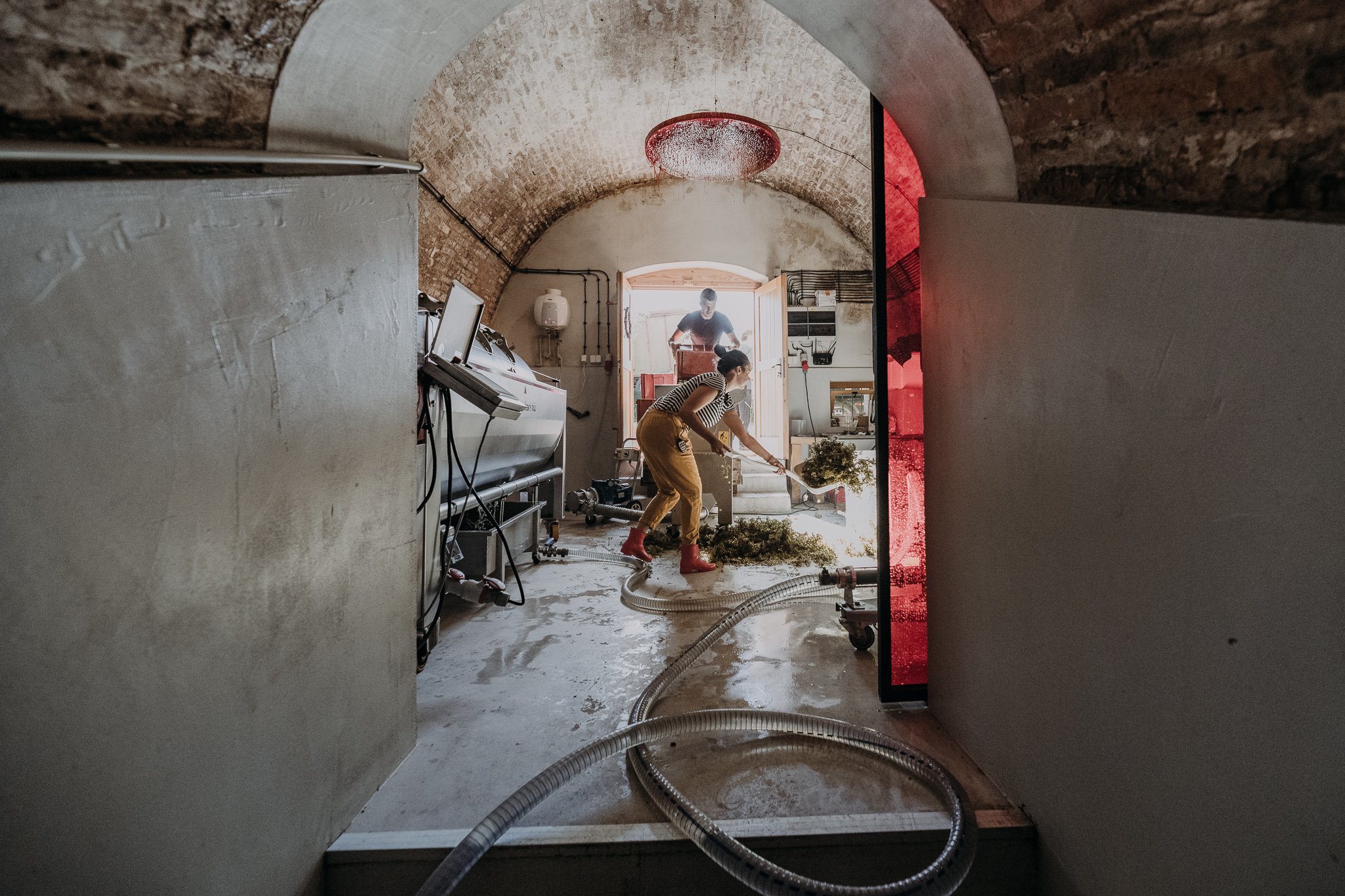
You are one of the founding members of the Young Winemakers Association. How did that idea emerge? Is it just a formal organization, or a real group of friends?
It all started in 2016 at the ProWein trade fair. My friend Eva Pelikánová and I saw how successfully young winemaker associations operated abroad, whether it was Germany’s Riesling Generation or Austria’s Junge Wilde Winzer. Their exhibitions had incredible energy and showed us that wine could be presented in a completely different way—modern, dynamic, and free of traditional stiffness.
When we founded Young Winemakers, we did not want to create just another professional union. Our goal was to build a group of people who genuinely enjoyed spending time together, who would happily go for a beer and connect on a human level. That chemistry is essential to us. Over the years, some members have left and new ones have joined, but whenever we consider new candidates, personal compatibility matters more than anything else. It is a community that energizes and inspires us, and people who attend our events can feel that atmosphere as well.
Can people buy your wines abroad?
Yes, our wines have found their way into international markets, although we certainly do not consider ourselves major exporters. At the moment, our strongest foreign market is Italy, which makes us particularly proud given the country’s rich winemaking tradition. Besides Italy, our wines can also be found in Sweden, Finland, and Poland. Overseas, we export to the United States, and recently we shipped our first pallets to Canada and Australia.
Although international success is wonderful, it would be very satisfying if we could eventually sell our entire production at home in the Czech Republic. Exporting provides valuable experience, but the domestic market—and being close to our customers and their tastes—makes the most sense to me.
Winemaking is still often perceived as a male-dominated world. How do you feel as a woman working in the industry? Do you encounter prejudice?
Winemaking has long been predominantly a male domain, and this stereotype still persists in the Czech Republic. It is fascinating to observe the difference between attitudes at home and abroad. When I present our wines internationally and say that I am a winemaker, people congratulate me and show appreciation.
At home, however, when I say, “I’m a winemaker,” people often assume I’m joking. Their immediate reaction is to ask whether my father, grandfather, or husband is actually responsible for the wine. It is as if a woman’s role is automatically viewed as secondary.
Is there any way to fight that?
I wouldn’t say I’m actively fighting it. The older I get, the more these prejudices and behavioral patterns simply make me sad because they seem unnecessary. The solution is actually quite simple: respect and recognition of expertise regardless of gender.
Do you have time for hobbies outside of wine?
Wine is both my profession and my hobby. It is such a diverse world that I rarely feel the need to escape from it. When I get tired of people, I retreat into the vineyard. When I need a creative outlet, I organize events, create content for social media, or develop new products. To keep a clear mind and maintain my energy, however, I need sport. Physical activity is absolutely essential in my life. I need movement to function well and feel good.
Two years ago, during harvest, I seriously injured my knee, so I had to stop running for a while. Since then, I spend more time in the gym and practicing yoga. I also love traveling. It is an enormous source of inspiration, and somehow wine always becomes part of my journeys. Spending time with close friends energizes me just as much.
What is the big dream you are currently focusing on?
This may surprise you, but my dreams are not about winning more awards or becoming as successful as some personal idol. My biggest dream right now is actually quite simple and deeply personal, so I’ll keep that one to myself. My second dream is a rather bold one: I would like to have a cow. Animals belong in the landscape and in viticulture, but I don’t want to force things. I believe such developments will happen naturally when the time is right.
Professionally, my greatest wish is that our wines bring people the same joy that winemaking brings to me. And if I could make one broader wish, it would be that life in the Czech Republic becomes better in the sense that we take greater pride in what is created here. I would like people to care about what they support and to appreciate the quality of our local food—from honestly grown potatoes to wine.
Who Is Dominika Černohorská?
Age and Origin: 38 years old, born and raised in South Moravia.
Education: Graduate of the Faculty of Horticulture at Mendel University in Brno, specializing in Viticulture and Enology.
A Life-Changing Choice: She originally chose winemaking studies as a “backup option.”
Plenér Winery: Founded in 2016 in Pavlov together with her former dentist, Ivo Marek.
Recent Achievement: Overall winner of the prestigious Winery of the Year 2025 competition.
Relationship with Nature: Recipient of the Vinatura Sustainability Award, known for her commitment to organic viticulture and biodiversity, including installing nesting boxes for endangered bird species such as hoopoes and little owls.
Photo gallery to the article